Buried lines do not sell
A retail item placed after the drinks gets no image, no position, and no prompt at the moment the diner decides.
For independent kitchens on Uber Eats, DoorDash and Skip
Same food, same kitchen, same week. The difference is a price list nobody has opened since onboarding. We find the gap for free, and if there is not one, we tell you that too.
Sixty second estimate
Left on the table, per year
$10,080
About $840 a month, recoverable in one afternoon.
Recovery = sales × markup × (1 − take). The markup you already charge elsewhere, applied to the channel that never got it.
Don't take our word for it.
Check in sixty seconds.
01 · The math
Base menu price of $100, published commission rates, plus card processing. The bar is what lands in your account.
| Channel | Diner pays | You keep | Retention |
|---|
Marketplace delivery commission in Canada runs roughly 25–30%, plus about 3% card processing. Menu markup is whatever you set, per channel. Your own site carries only the processor.
Notice what this rules out. If your own ordering page already keeps 94–95¢, moving an order off the apps is worth five points, not thirty. Anyone selling you a website on “escape the commissions” is quoting a number you do not have. The real money is the 18¢ gap between your best-priced app and your forgotten one, and closing it takes an afternoon, not a migration.
02 · The second leak
The jar of house hot sauce. The tub of hummus. The five pack of pita. Highest margin on the menu, travels perfectly, and on every marketplace it sits collapsed under the soft drinks.
A retail item placed after the drinks gets no image, no position, and no prompt at the moment the diner decides.
An $11 jar on an existing $40 ticket adds no labour, no packaging run, no extra delivery. Cleanest profit on the menu.
On 6,000 online orders a year, moving attach from zero to 5–15% is a four figure swing in gross profit.
This is what a storefront honestly changes. Not your commission rate, which is contractual. The shelf position, the photograph, and the prompt at checkout.
03 · The product
Write the dish once, set the markup per channel once. Mise pushes it everywhere, watches for drift, and lands every order in one feed.
Designed for your kitchen, with your food photographed properly and your retail shelf merchandised instead of buried. Checkout stays with whoever runs it today.
Per-channel prices live in one place. The day a channel drifts back to counter pricing, you get the alert and the one-tap fix, not a surprise at month end.
Every channel in one screen for the pass, and per-channel margin, not just gross, in the weekly summary your bookkeeper actually wants.
Your POS. Stays exactly as it is.
Your checkout and payouts. Your current processor keeps processing. We never sit in the payment path.
Your marketplace contracts. We do not renegotiate commission. We make sure it is charged on the price you chose.
04 · Proof
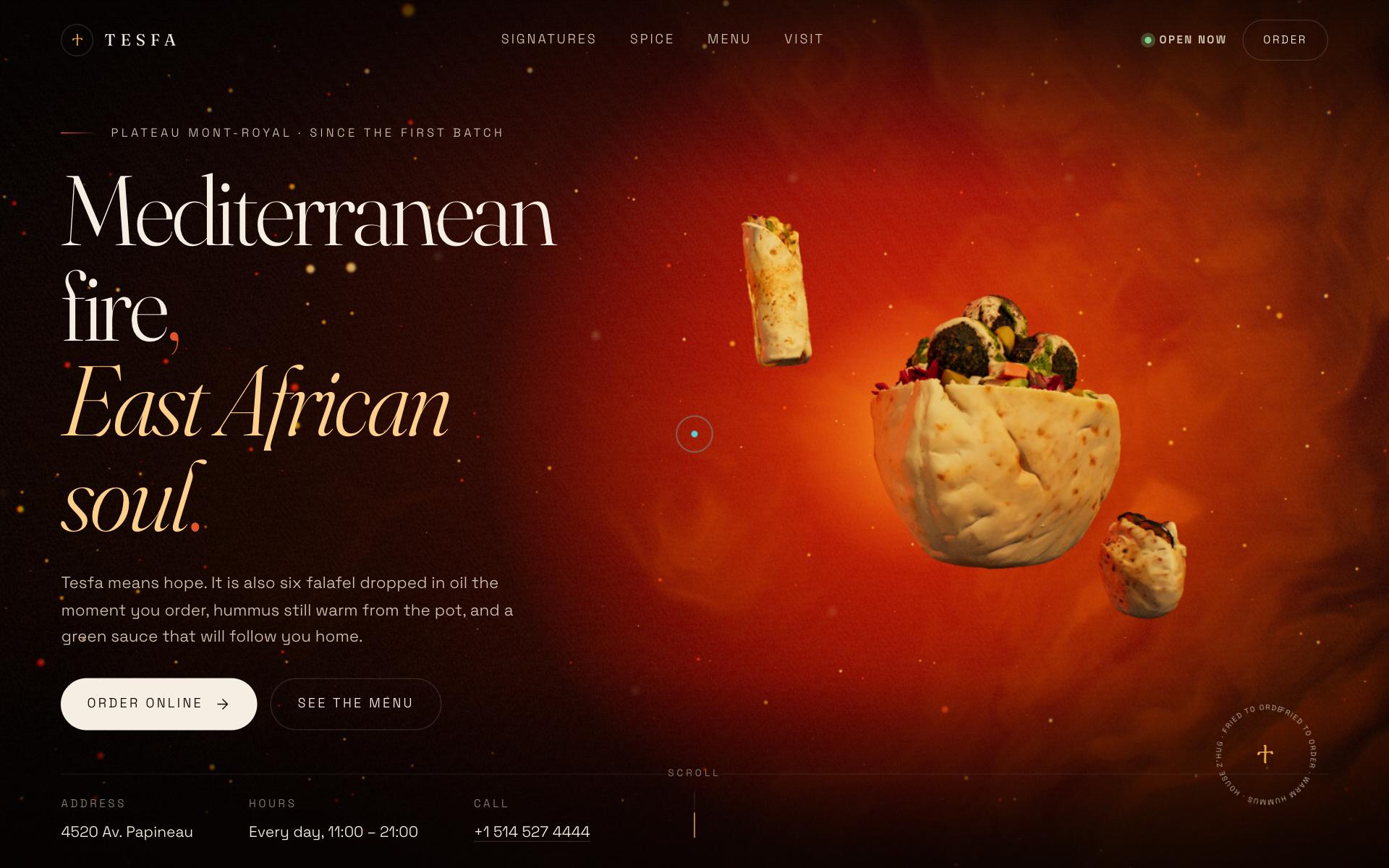
Built for a Mediterranean and East African kitchen in Plateau Mont-Royal. Real menu, real prices, and the house sauces given their own shelf instead of a line under the drinks.
 Open the live site
Before
Retail jars listed under “Grocery”, below the soft drinks, no photos.
After
A dedicated, photographed shelf section, and an attach prompt at checkout.
05 · Pricing
A managed ordering plan runs most kitchens about $150 a month. Mise sits on top of it, so weigh it against what it adds, not what it replaces.
The build
$3,000–4,000 one time
Depending on menu size and how much we photograph.
The running of it
$99/month
Hosting, menu sync, parity alerts, seasonal merchandising.
06 · Start free
Tell us the restaurant and city. We pull your public listings on every channel and send back one page. If your pricing is clean, the page says so and we both move on.
07 · Fair questions
It can, which is why the audit reports the gap and you pick the number. Most kitchens match what they already charge on their other apps, where the same diners already order at those prices.
No. They bring customers you would not otherwise reach. The point is to be paid your own price on every one of them and to see what each channel actually nets.
No. Flat build, flat monthly. We never sit in the payment path, so there is nothing to skim and nothing new to reconcile.
No, and we will usually tell you not to. If your checkout works and the rate is fair, keep it. We are the storefront and the pricing control on top.
Then you have documented proof your pricing is clean, free, and we both move on. We would rather say that than sell a project on a number that is not there.
Every week the third app runs at counter price is a week of commission charged on a number you never chose. The check is free and the page is yours either way.
Get the free parity audit